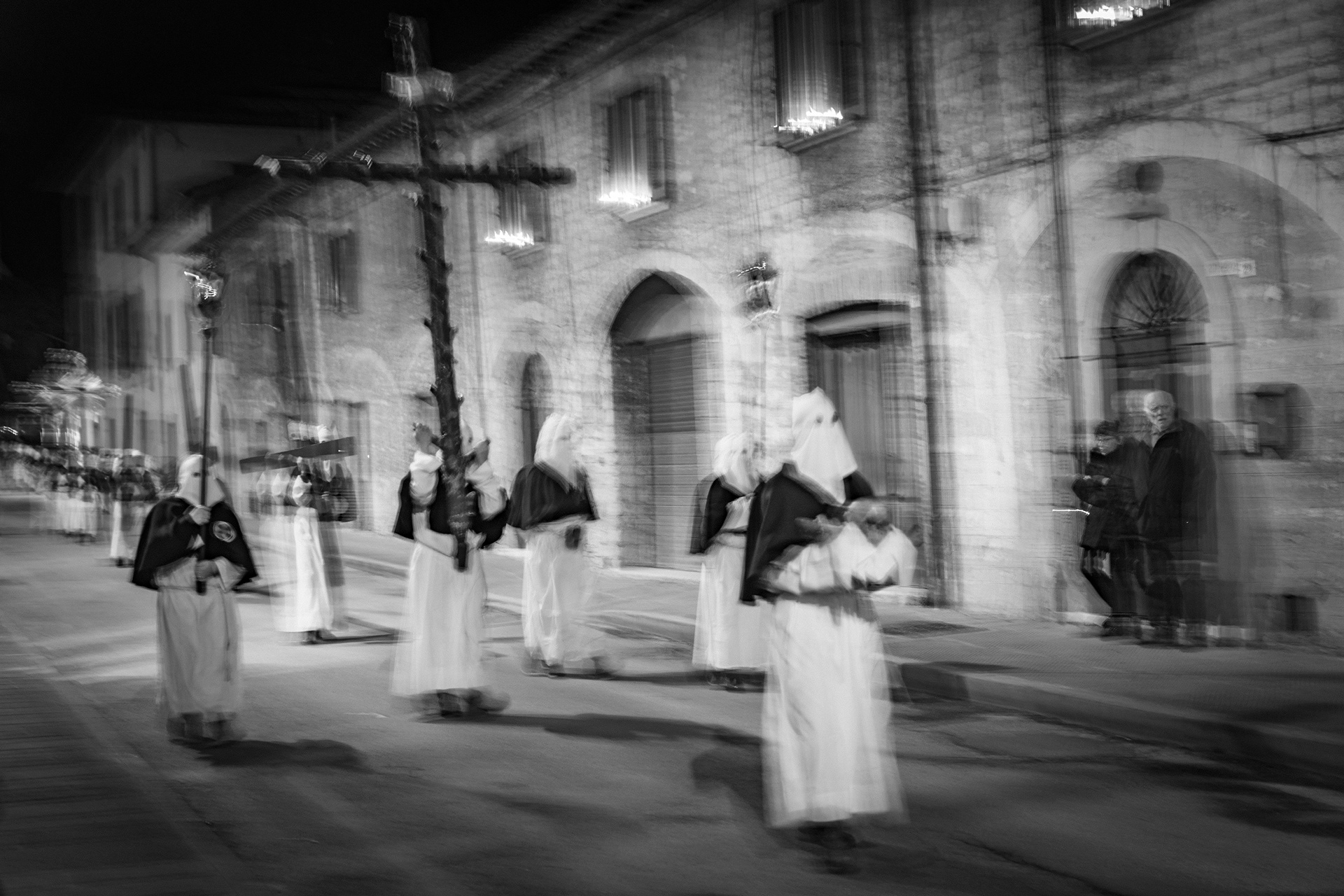
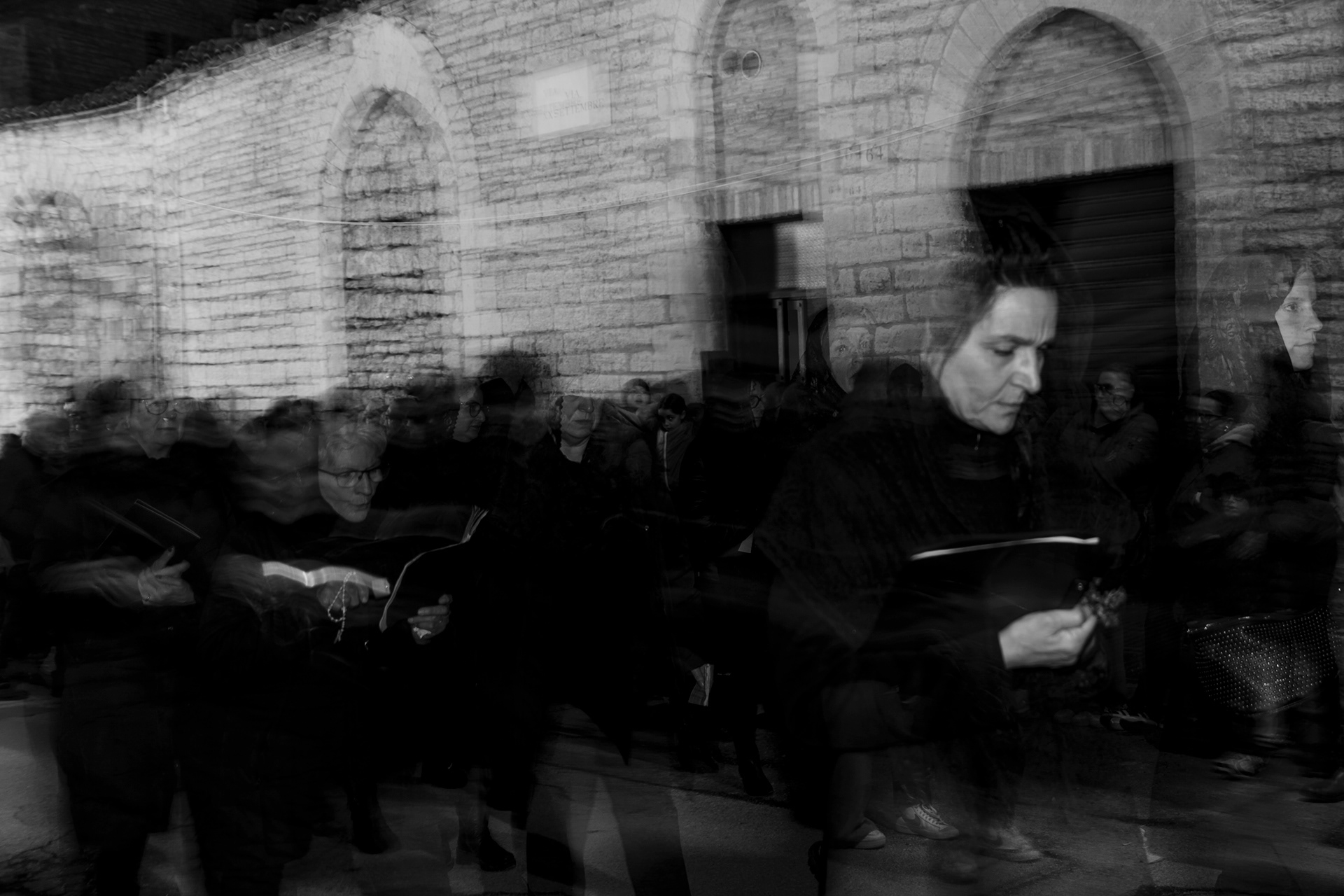
Nella notte del Venerdì Santo Gubbio si trasforma. La città rallenta, si raccoglie, si lascia attraversare da una processione che da secoli ne percorre le strade come un gesto condiviso di memoria e appartenenza. Il Cristo Morto avanza nella penombra, accompagnato dai confratelli incappucciati, e il tempo sembra sospendersi.
La processione non è solo un evento religioso, ma un’esperienza collettiva profondamente radicata nell’identità eugubina. È un cammino che unisce generazioni, un rito che lega lo spazio urbano alla dimensione interiore di chi partecipa e di chi osserva, trasformando le vie di pietra in un luogo di silenzio, attesa e ascolto.
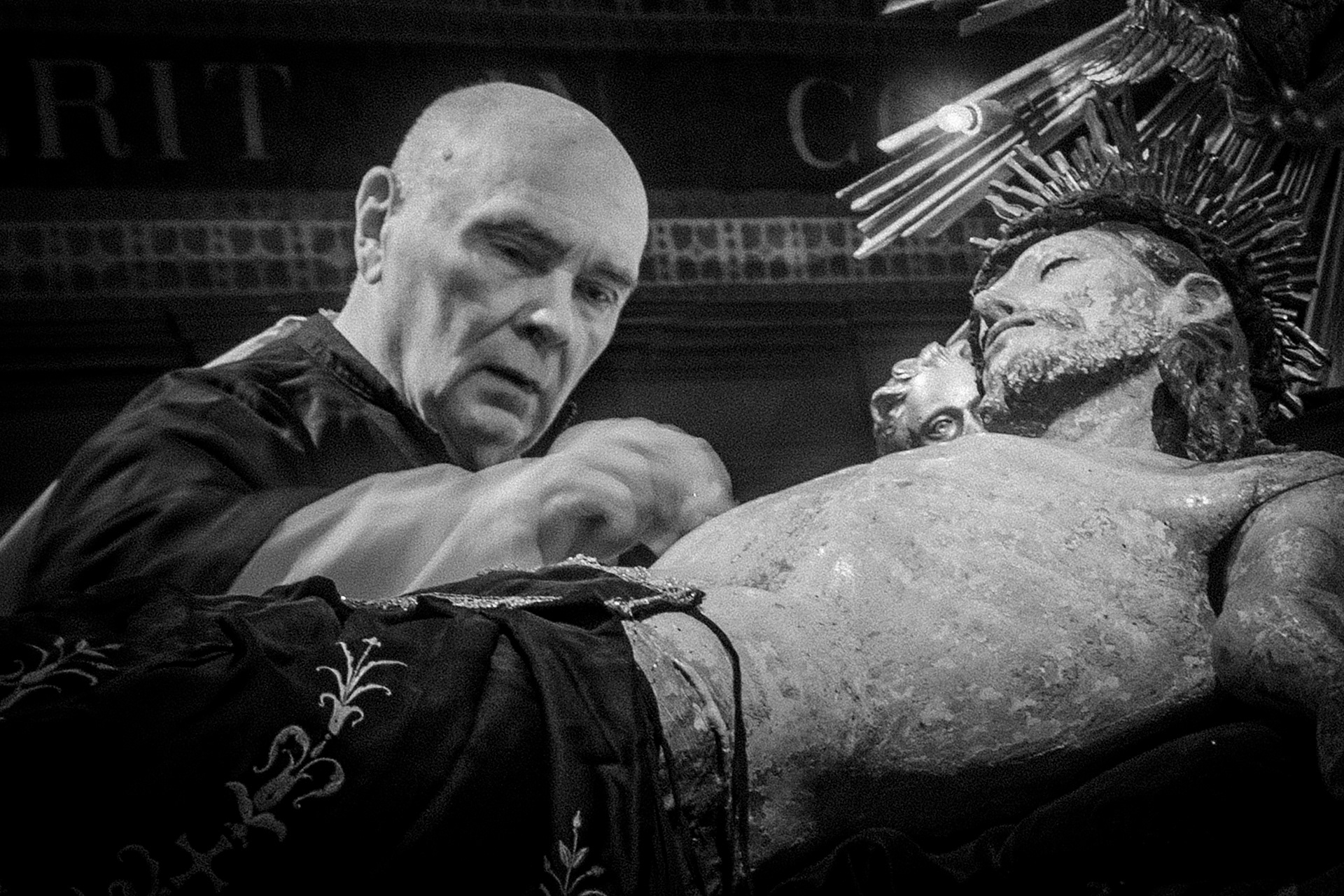
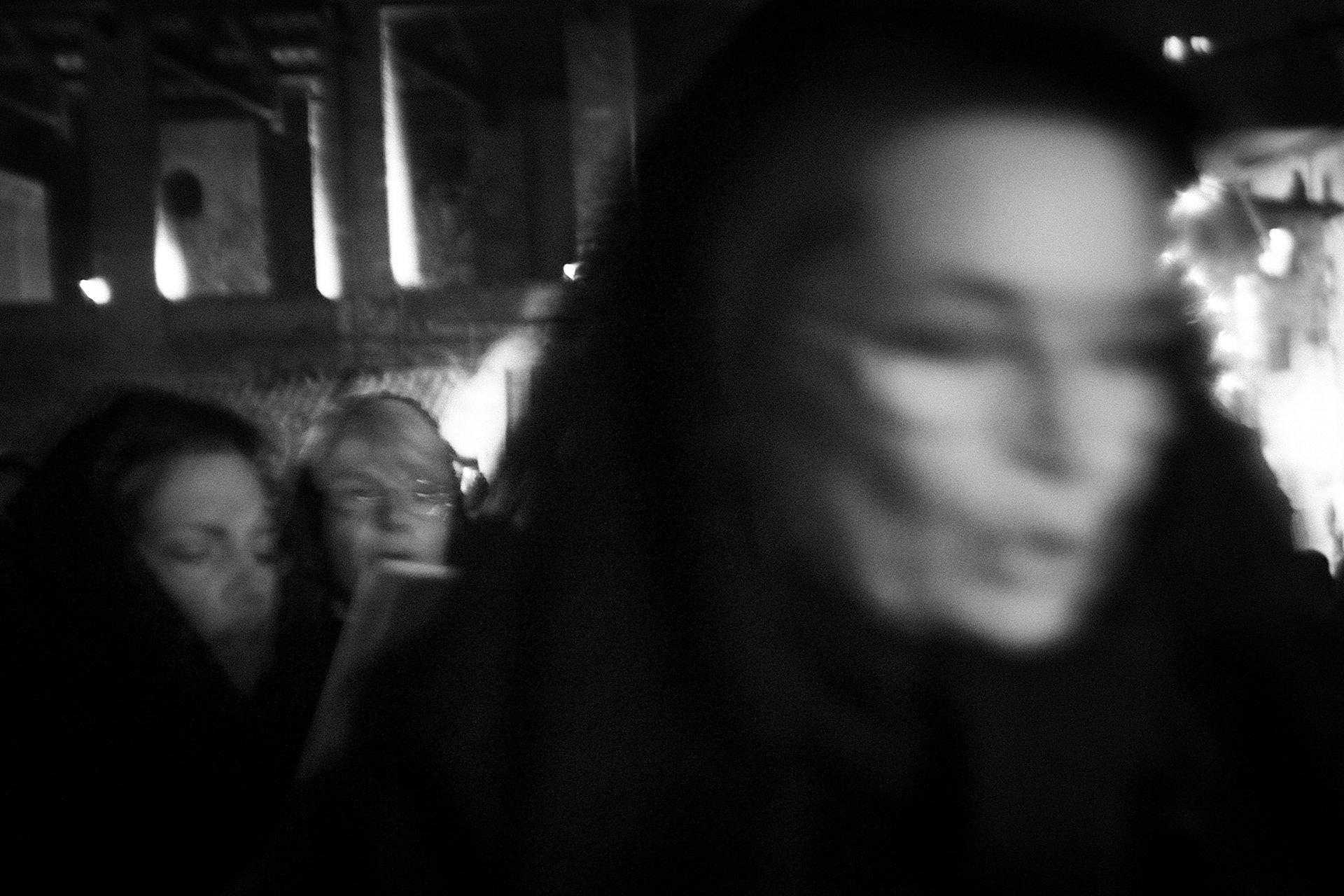
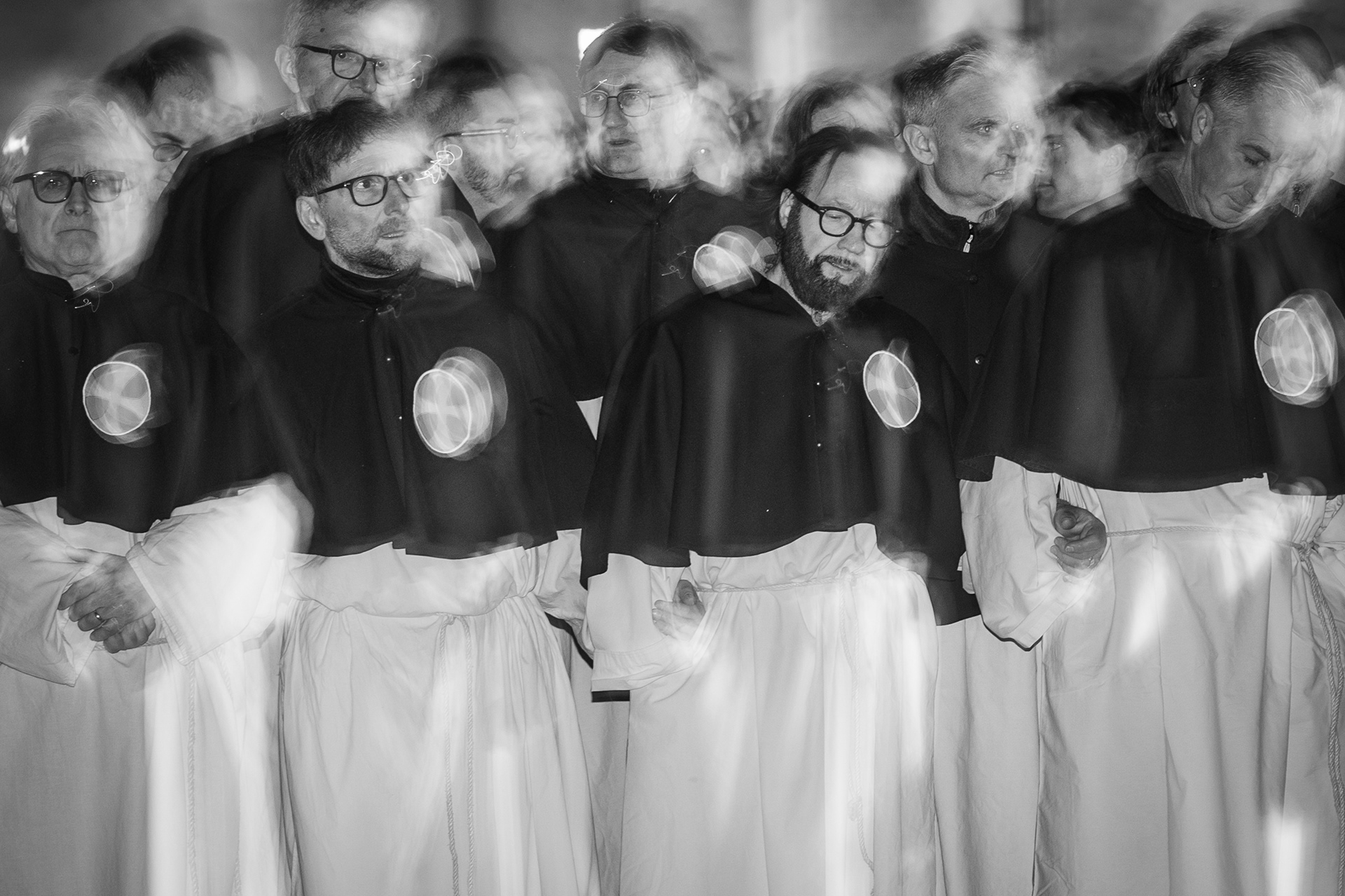
Questo progetto fotografico nasce dal desiderio di seguire quel percorso antico, di osservare il passo lento dei confratelli che avanzano sottobraccio, i volti raccolti nella concentrazione, le ombre che si proiettano sui muri, il corpo del Cristo portato con rispetto e gravità. Ogni immagine è un frammento di quel passaggio, un tentativo di restituire la densità emotiva della notte.
Il Cristo non appare qui come figura trionfante, ma come presenza fragile e umana, affidata alle mani della comunità. La sua morte diventa momento di condivisione del dolore, ma anche gesto che tiene aperta una possibilità di senso, di continuità, di speranza.
Attraverso queste fotografie, la processione si rivela per ciò che è: un rito che non appartiene solo alla fede, ma alla città stessa. Un linguaggio silenzioso che, ogni anno, continua a unire Gubbio nel segno della memoria, del raccoglimento e della partecipazione comune.
____________________
On the night of Good Friday, Gubbio is transformed. The city slows down, gathers in silence, and is carried by a procession that has passed through its streets for centuries as a shared gesture of memory and belonging. The dead Christ moves through the darkness, accompanied by hooded confraternity members, and time itself seems to stand still.
More than a religious event, the procession is a collective experience deeply rooted in the identity of Gubbio. It is a journey that connects generations, a ritual that binds the urban landscape to the inner lives of those who take part and those who watch, transforming the ancient stone streets into a place of silence, reflection, and contemplation.
This photographic project was born from the desire to follow that ancient path: to observe the slow steps of the confraternity members walking arm in arm, the faces absorbed in quiet concentration, the shadows cast upon the walls, and the body of Christ carried with dignity and reverence. Each photograph is a fragment of that passage, an attempt to convey the emotional depth and solemnity of the night.
The Christ does not appear here as a triumphant figure, but as a fragile and profoundly human presence, entrusted to the hands of the community. His death becomes a shared experience of grief, while at the same time preserving the possibility of meaning, continuity, and hope.
Through these photographs, the procession reveals itself for what it truly is: a ritual that belongs not only to faith, but also to the city itself. A silent language that, year after year, continues to unite Gubbio through memory, contemplation, and a shared sense of belonging.